Photography Friendly Desert Safari: 21 Ultimate Secrets for Epic Photos
A photography friendly desert safari is the ultimate key to unlocking the true visual soul of the Arabian desert. It is a specialized journey, meticulously crafted for the photographer who sees the world through a lens and understands that a great image is born from a perfect combination of light, timing, and opportunity.
The desert is a photographer’s dream—a vast, minimalist canvas of epic scale, sculpted by light and shadow. However, capturing its true majesty is a profound challenge. The light is intense, the landscape is dynamic, and the best moments are fleeting. A standard, rushed tourist safari is simply not designed to meet the needs of a photographer.
This is where a photography friendly desert safari changes the game. It is an experience built around the art of image-making. It’s the luxury of time during the magical golden hour, the expertise of a guide who understands light and composition, and the freedom to wait for that perfect, fleeting moment.
This ultimate guide is your definitive manual for this specialized adventure. We will unveil 21 secrets to finding, planning, and maximizing a photography friendly desert safari. We will provide a complete blueprint, from the essential gear you need to the specific techniques that will elevate your images from simple snapshots to breathtaking works of art. This is how you transform a standard Dubai desert adventure into an epic photographic expedition.
The Standard Safari Trap: Why Most Tours Fail Photographers
To truly appreciate the value of a photography friendly desert safari, you must first understand the significant limitations of a standard, one-size-fits-all tour. While fun, these tours are fundamentally at odds with the core requirements of good photography.
The Tyranny of the Rushed Itinerary
The business model of a standard safari is based on volume and efficiency. This translates to a rigid, fast-paced itinerary that is the enemy of thoughtful photography.
The sunset stop, the most critical moment for any photographer, might last only 10-15 minutes on a standard tour. This is barely enough time to get out of the car, let alone set up a tripod, compose a shot, and wait for the light to be perfect.
A photography friendly desert safari is built on a different philosophy. It is unhurried, allowing for extended stops and the patience required to capture truly stunning images.
The Problem of Poor Timing and Light
Photography is the art of painting with light. The best light in the desert is during the “golden hours”—the period shortly after sunrise and before sunset.
Standard evening safaris often arrive in the desert too late, catching only the very end of the golden hour. A specialized photography friendly desert safari is timed with obsessive precision to ensure you are in the perfect location during the peak of the magical light.
The Crowded Convoy Conundrum
A standard safari often involves being part of a large convoy of vehicles. This means that at every scenic stop, you will be sharing the view with dozens of other people.
This makes it nearly impossible to get a clean, pristine landscape shot without other tourists in the frame. It also means your foreground will likely be littered with tire tracks from the vehicles in front of you. A photography friendly desert safari takes you away from these crowds to secluded, untouched locations.
A Driver, Not a Creative Partner
The guide on a standard tour is a driver. Their job is to get you through the itinerary safely and on time. They are not trained to understand the needs of a photographer.
They may not know how to position the vehicle for the best light or be willing to wait for you to capture a specific shot. A guide on a photography friendly desert safari is a creative partner who actively helps you get the best possible images.
What Defines a True Photography-Friendly Desert Safari?
A genuine photography friendly desert safari is not just a tour with a few extra photo stops. It is an experience that has been fundamentally redesigned from the ground up with the photographer’s needs as the central focus.
The Pillar of Optimal Timing
The entire itinerary is reverse-engineered from the best light. The tour will start earlier than a standard safari to ensure you are deep in the dunes well before the golden hour begins. The sunset stop is not a brief pause; it is the main event of the desert drive, often lasting an hour or more.
The Luxury of a Private or Small-Group Tour
A true photography friendly desert safari is never a large group experience. It is either a private tour, where the entire experience is tailored to you, or a very small group tour with other like-minded photography enthusiasts.
This guarantees an unhurried pace, personalized attention from the guide, and unobstructed access to the best viewpoints.
The Photography-Savvy Guide
This is the most critical element. The guide on a photography friendly desert safari is more than a driver; they are your creative assistant in the field.
A great photography guide will:
- Understand Light: They know how the light will behave at different times of the day and can take you to locations that make the most of it.
- Know the Best Locations: They have a mental map of the most photogenic dunes, unique formations, and pristine, track-free areas.
- Assist with Composition: They can help you find the best angles and even suggest creative shots.
- Be Patient: They understand that great photography takes time and are willing to wait for you to get the perfect shot.
An Emphasis on All Aspects of Desert Photography
A comprehensive photography friendly desert safari goes beyond just landscapes. It provides opportunities to capture a full visual narrative.
- Action Photography: During the dune drive and camel ride.
- Cultural Photography: At the camp, capturing details of the food, entertainment, and heritage.
- Portraiture: Taking beautiful portraits of your travel companions in the stunning desert light.
- Astrophotography: If it’s an overnight tour, there will be a focus on capturing the night sky.
The Photographer’s Toolkit: Essential Gear for Your Desert Safari
Arriving in the desert with the right equipment is crucial for success. This section of our photography friendly desert safari guide covers the essential gear you should bring.
The Camera: Your Eye on the World
While you can take good photos with any camera, a camera that gives you manual control will yield the best results.
- DSLR or Mirrorless Camera: These are the best options. Their larger sensors provide superior image quality, and they allow you to change lenses and have full manual control over your settings.
- High-End Smartphone: Modern smartphones have incredible cameras. To make the most of them, use a third-party app that allows you to control settings like ISO, shutter speed, and focus manually.
The Lenses: Your Creative Brushes
The lenses you bring will define the types of shots you can get. For a photography friendly desert safari, a versatile combination is key.
| Lens Type | Primary Use | Why It’s Essential for the Desert |
|---|---|---|
| Wide-Angle Lens (14-35mm) | Capturing epic, sweeping landscapes. | Essential for conveying the vastness and scale of the desert. Perfect for sunset vistas. |
| Standard Zoom Lens (24-70mm) | A versatile, all-purpose lens for general shots, environmental portraits, and details. | Your workhorse lens for most of the safari. |
| Telephoto Lens (70-200mm) | Compressing landscapes, capturing distant details, and taking candid portraits. | Great for isolating a single camel on a distant dune or capturing the action of the entertainment from your seat. |
| Fast Prime Lens (e.g., 50mm f/1.8) | Excellent for portraits and low-light photography at the camp. | Creates beautiful, blurry backgrounds (bokeh) and performs well in the dark. |
The Support System: Tripods and Stability
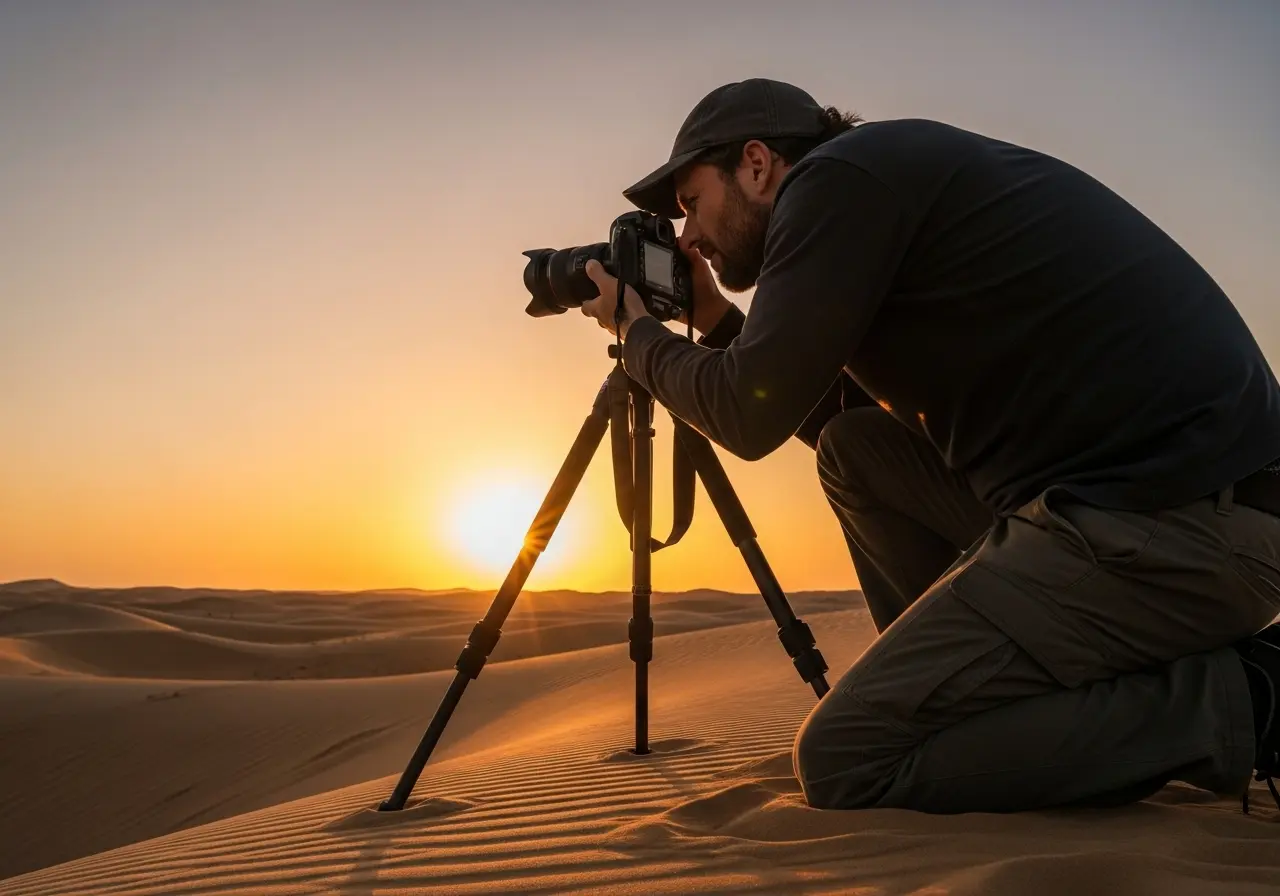
A sturdy tripod is a non-negotiable piece of gear for any serious photography friendly desert safari.
- For Sunset and Low Light: As the sun sets, your shutter speeds will get longer. A tripod is the only way to get sharp, blur-free images in low light.
- For Creative Techniques: A tripod is essential for techniques like long exposures or HDR (High Dynamic Range) photography.
- For Self-Portraits: It allows you to set up your camera and use a timer to get in the shot yourself.
Choose a lightweight travel tripod that is easy to carry.
Essential Accessories for the Desert Environment
The desert is a harsh environment for camera gear. These accessories are vital.
- Extra Batteries: The heat can drain batteries faster than usual. Bring at least one fully charged spare.
- Multiple Memory Cards: You will be shooting a lot. Don’t risk running out of space.
- A Circular Polarizing (CPL) Filter: This is a secret weapon for desert photography. It reduces glare on the sand and deepens the blue of the sky, making your photos look more vibrant and saturated straight out of the camera.
- A Lens Cleaning Kit: The desert is dusty. A blower, a soft brush, and microfiber cloths are essential for keeping your lenses and sensor clean.
- A Camera Bag: A good backpack-style camera bag will protect your gear from sand and make it easy to carry.
Mastering the Art: Pro Techniques for Stunning Desert Photos
Having the right gear and being on a photography friendly desert safari is the start. Now, you need to apply the right techniques to capture breathtaking images.
The Magic of Light: Mastering Golden and Blue Hour
The light is the most important ingredient.
- The Golden Hour: This is the hour just before sunset. The light is soft, warm, and directional, creating long, beautiful shadows that define the shape of the dunes. This is the prime time for landscape and portrait photography.
- The Blue Hour: This is the period just after the sun has set, when the sky takes on a deep, rich blue hue. It’s a magical, short-lived period that is perfect for atmospheric shots of the camp with its lanterns lit.
A photography friendly desert safari is designed to give you maximum time during these two crucial periods.
Composition: Telling a Story with Your Frame
How you arrange the elements in your photo is key.
- The Rule of Thirds: Imagine a tic-tac-toe grid over your image. Place key elements, like the horizon or a subject, along these lines or at their intersections for a more balanced and dynamic composition.
- Leading Lines: Use the sharp, curving ridges of the dunes as natural leading lines to draw the viewer’s eye into your photograph.
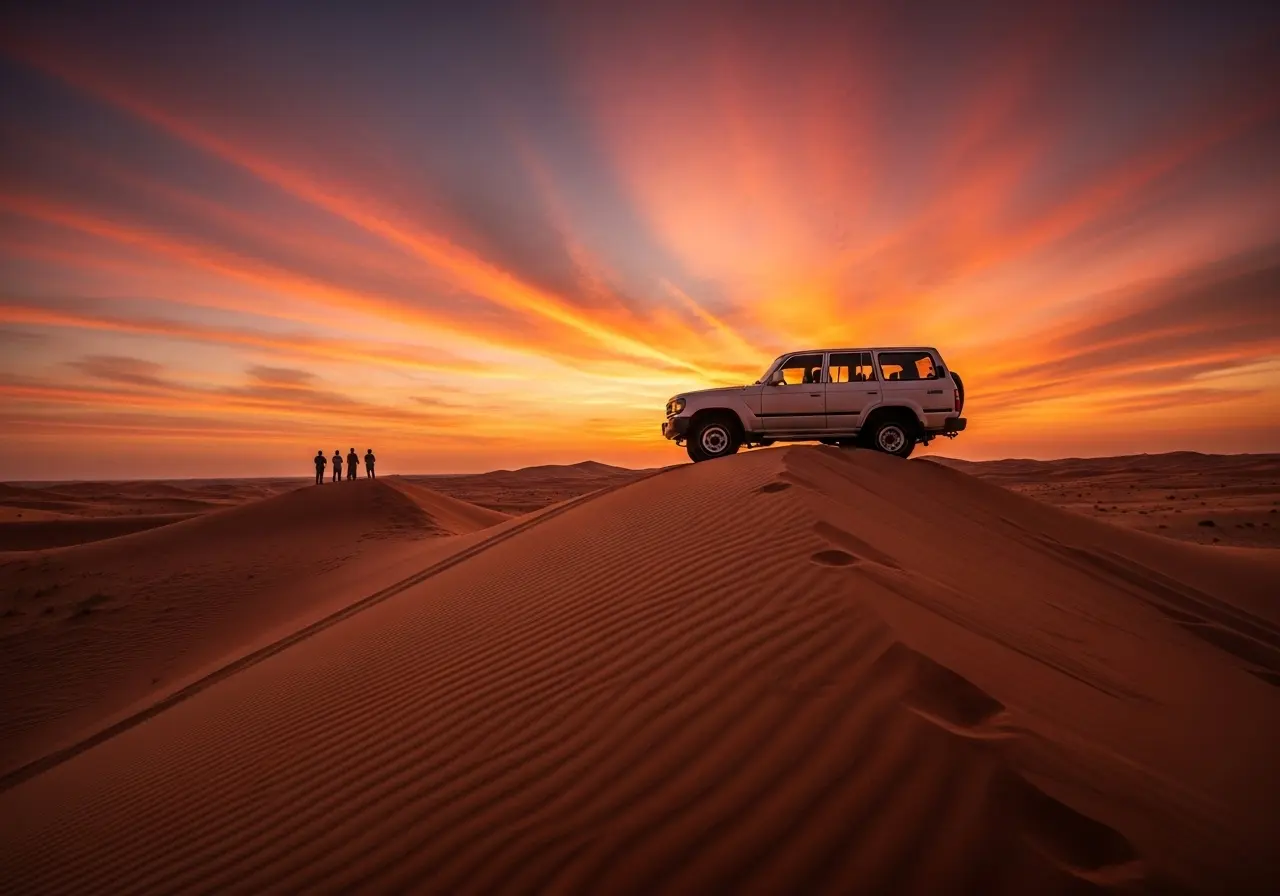
- Sense of Scale: The desert is vast. To convey this, include a human element (a person, a camel, a 4×4) in your landscape shot. This gives the viewer a reference point and emphasizes the immense scale of the dunes.
- Focus on Texture and Pattern: Get low to the ground and use the side-light of the golden hour to capture the intricate, wind-carved patterns and textures in the sand.
Nailing the Exposure: The Exposure Triangle in the Desert
The bright desert light can be tricky. Shooting in Manual or Aperture Priority mode will give you the most control.
- ISO: Keep your ISO as low as possible (e.g., 100 or 200) during the day to get the cleanest, most detailed images. You will only need to increase it after the sun has set.
- Aperture: For landscapes, use a smaller aperture (a higher f-number, like f/8 or f/11) to ensure everything from the foreground to the background is in sharp focus. For portraits, use a wider aperture (a lower f-number, like f/2.8) to create a beautifully blurred background.
- Shutter Speed: Adjust your shutter speed to get the correct exposure. Be mindful that if your shutter speed is too slow (e.g., below 1/100th of a second), you may get blur if you are hand-holding the camera.
Capturing the Action: Freezing the Motion
Your photography friendly desert safari will present opportunities for action photography.
- Dune Bashing: Use a fast shutter speed (e.g., 1/1000s or faster) to freeze the motion of the 4×4 and the spray of the sand. Use your camera’s continuous shooting (burst) mode to capture a sequence of shots and choose the best one later.
- Camel Riding: A slightly slower shutter speed can work here, but to ensure a sharp shot of the rider, keep it reasonably fast (e.g., 1/250s or faster).
The Art of the Silhouette
The desert sunset is the perfect time to create a dramatic silhouette.
- Position your subject (a person, a camel) on the crest of a dune.
- Frame your shot so the bright, colorful sky is behind them.
- Expose for the sky. Point your camera at the brightest part of the sky and half-press the shutter to lock the exposure.
- Recompose your shot with the subject in place and take the picture. Your camera will render the subject as a dark, sharp silhouette against a beautifully exposed sky.
Beyond the Dunes: A Complete Photographic Narrative
A great photography friendly desert safari provides opportunities to capture a complete story, not just landscapes.
The Camp: Capturing the Cultural Ambiance
When you arrive at the camp, switch your focus to details.
- Shoot in the Blue Hour: The best time to photograph the camp is during the blue hour, when the sky is a deep blue and the camp’s lanterns and fires are lit, creating a beautiful contrast of warm and cool light.
- Focus on Details: Capture close-up shots of the intricate carpets, the traditional coffee pots (dallah), the platters of dates, and the glowing shisha pipes.
- Capture the Food: The BBQ dinner is a feast for the eyes. Take photos of the chefs at the live grilling stations and the colorful array of dishes on the buffet.
The Entertainment: Mastering Low-Light Action
Photographing the evening shows is a challenge, but very rewarding.
- Increase Your ISO: You will need to increase your ISO (e.g., to 3200 or 6400) to get a fast enough shutter speed in the dark.
- Use a Fast Lens: A prime lens with a wide aperture (like f/1.8) is ideal here.
- For the Tanoura Dance: Experiment with a slow shutter speed (e.g., 1/15s) while holding the camera steady to create beautiful, artistic motion blur from the dancer’s skirt.
- For the Fire Show: Use a fast shutter speed (e.g., 1/200s) to freeze the flames and the performer’s dramatic movements.
How to Choose Your Perfect Photography Safari
Choosing the right operator is the most critical decision for a successful photography friendly desert safari.
The Specialist Operator is Key
You must choose an operator that either offers a dedicated photography tour or a highly customizable private tour. A standard group tour will not meet your needs.
A specialist operator like Hafiz Tourism understands the specific requirements of photographers and can provide the right guide, timing, and locations.
Questions to Ask Before You Book
When contacting an operator, ask these specific questions:
- “Do you offer a dedicated photography friendly desert safari?”
- “Are your guides trained to assist photographers with finding the best locations and light?”
- “Can you guarantee a private or very small group tour?”
- “How long is the sunset stop on your photography tour?”
- “Can you take me to pristine locations without other tour groups or tire tracks?”
The quality of their answers will reveal their level of expertise. For further research, an external resource like Dubai Desert Safarie may also list operators who cater to photographers.
A Photographer’s Booking Checklist
| Feature | What to Look For |
|---|---|
| Tour Type | A dedicated “Photography Tour” or a “Private, Customizable Tour.” |
| Guide Expertise | The operator should emphasize that their guides are photography-savvy. |
| Itinerary | The timing should be centered around the golden and blue hours. |
| Location | The tour should go to a secluded or protected area to avoid crowds. |
| Reviews | Look for reviews from other photographers who praise the experience. |
Conclusion: Capture the Soul of the Desert
A photography friendly desert safari is an investment. It is an investment in your passion, your craft, and in the creation of timeless, breathtaking images.
It is the difference between coming home with a few nice snapshots and coming home with a gallery of art that truly captures the majestic, profound, and ever-changing soul of the Arabian desert.
By choosing a specialist operator, preparing your gear, and applying the right techniques, you are not just booking a tour; you are commissioning an experience. You are giving yourself the gift of time, access, and expertise.
So, charge your batteries, clean your lenses, and book a photography friendly desert safari. The adventure of a lifetime, and the photos to prove it, await.